If you’re experiencing degraded Wi-Fi performance at your home, it may be a good idea to switch to a different Wi-Fi channel. And if you’re an OS X user, things couldn’t get any easier as Michael Birenbach points out that OS X’s built-in ‘Wireless Diagnostics’ tool lets you find the best and most interference free channel to use for your Wi-Fi network (via SixColors).
The following steps are for OS X Yosemite, but the principles should be the same for all recent versions of OS X:
Step 1:
Hold down the Option key on your keyboard and click on the Wi-Fi menu in your menu bar.
Step 2:
Choose “Open Wireless Diagnostics…” and click Continue.
Step 3:
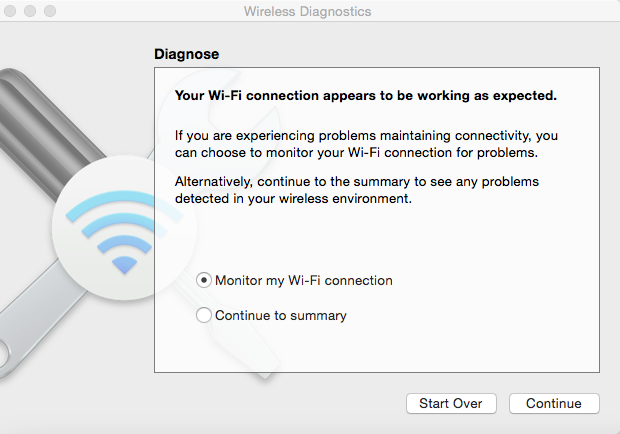
Enter your admin username and password. Then, wait for the initial diagnostic to finish (it may take a few seconds). It’ll tell you everything is working as expected, which is normal. Do not close this window.
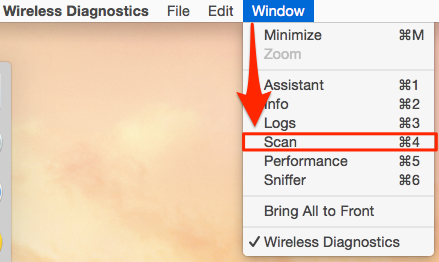
Step 4: Next, from the Window menu, choose Scan.

Step 5:
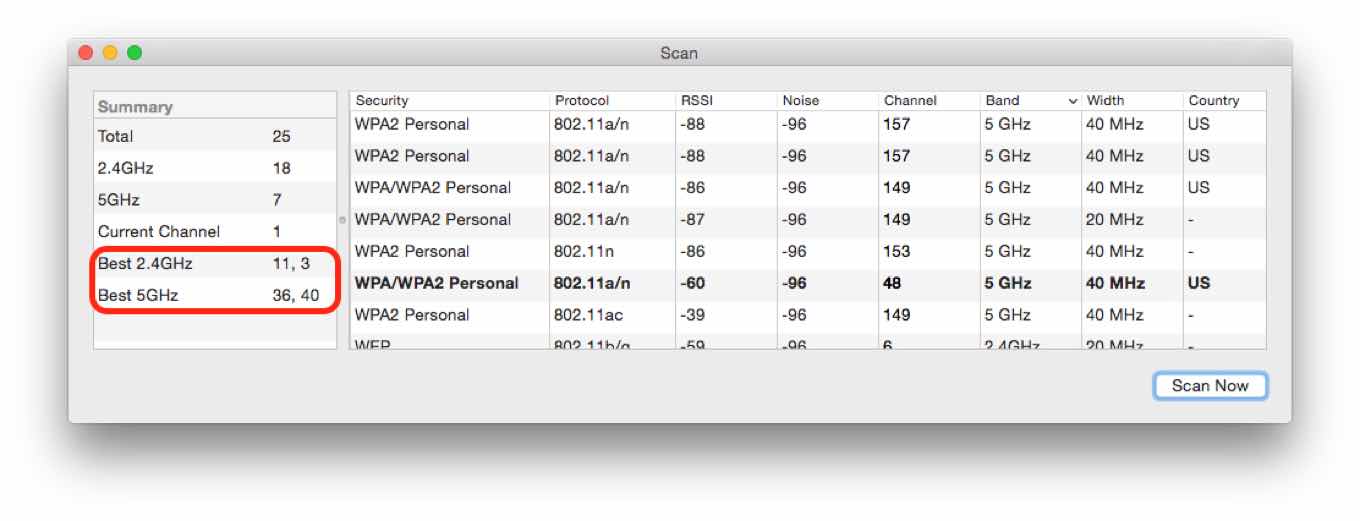
This will open up a window with a detailed amount of information about all the Wi-Fi networks in your vicinity, along with suggestions for the best 2.4GHz and 5GHz channels, as seen below:

Changing your Wi-Fi channel varies depending on routers, but it’s generally pretty straightforward. Let us know if this helped you out.



Always do this before calling up your ISP to complain about your wireless speed
These steps did not work
We’ve clarified one of the steps. Wait for the initial diagnostic to finish first (after you enter your admin password), then go to the Scan option.
After entering my admin password I’m told that my wireless connection seems to be working as expected and then given the option to ‘monitor my wi-fi connection’ or ‘continue to summary’. Neither of which result in anything like what is described in this article.
Once you’ve gotten to this stage, go to Window > Scan in the top menu.
Thanks Gary. It was the fact that ‘scan’ is accessed from the menu bar that was confusing me.
?????? Is the a Windows 8 tip?
These instructions do not work for me despite the fact that I have the operating system required. These steps are junk!
Do us all a favor and never post an how to item again.
Hi everyone, we’ve clarified the tutorial. Please let us know if it works for you! Cheers