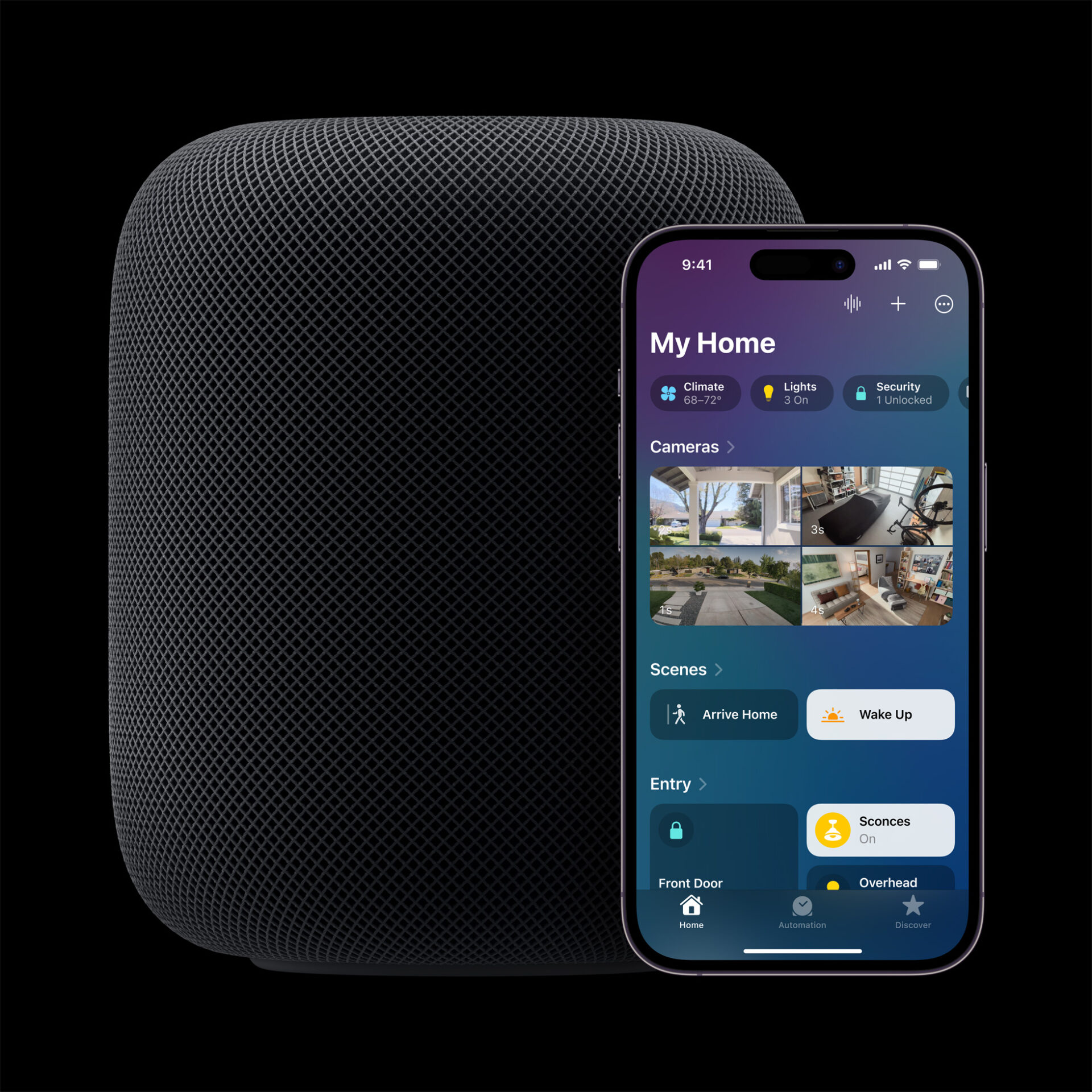
Apple’s Smart Home Hub With Siri AI and Face Recognition Could Launch Next Month
Apple's long-awaited smart home hub could launch as early as next month with facial recognition and Siri AI, according to Mark Gurman.
In its tear-down of Meta’s new $800 Ray-Ban Display AR glasses, iFixit found that the product showcases an optical innovation in consumer augmented reality, but also presents a sobering lack of repair options.

One of the product’s more predictable wear-out points is the battery, which is rated for about six hours under mixed use. While the internal 960 mWh battery is somewhat replaceable in theory, Meta has not published or sold replacement batteries.
Getting to the battery requires prying open the arms of the glasses, which are sealed with glue rather than clips or screws. That path is fraught: delicate ribbon cables lie just beneath the seams, and resealing the arms is essentially left to chance. Because of the glue, even getting into the battery compartment risks irreparable damage. iFixit warns that one careless move could rupture critical internal connections.
The standout feature is the lens assembly itself. Rather than relying on typical diffractive waveguides that split and bend light (often causing rainbow effects or “eye glow” visible to others), Meta’s glasses use a geometric reflective waveguide composed of multiple coated glass layers and tiny partially reflective mirrors.
This design helps eliminate several artifacts seen in older AR lenses. There is no distracting light leaking out to bystanders, and little to no rainbow effect under overhead lighting. Meta likely sources these waveguides via specialty makers like Schott and Lumus, firms known to work in the geometric waveguide space.
Even with this optical elegance, the build leaves little room for repair. The lenses are glued directly to the waveguide glass, making lens replacement nearly impossible. The hinges are buried beneath glue and held by microscopic T3 screws, meaning disassembly demands fine tools and patience.

The electronics fare no better. The speakers, battery, and sensors are soldered, not modular. Once a component fails, the entire system is at risk. iFixit notes that the sheer quantity of adhesive is extreme relative to its IPX4 splash resistance rating.
Because Meta did not include design features to support disassembly or reassembly, these glasses effectively become unrepairable for anyone but highly specialized labs. iFixit concludes that early AR wearables may be exceptional in capability but built for replacement rather than restoration.
Want to see more of our stories on Google?

P.S. Want to keep this site truly independent? Support us by buying us a beer, treating us to a coffee, or shopping through Amazon here. Links in this post are affiliate links, so we earn a tiny commission at no charge to you. Thanks for supporting independent Canadian media!

