The folks over at 9to5Mac have just dug up some new system wallpapers in the latest iOS 16 beta 4 release, which are ready for the highly-anticipated always-on display expected to debut in the ‘iPhone 14 Pro’ models.
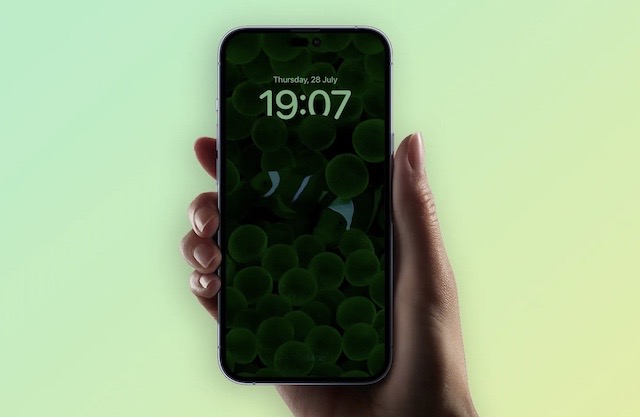
For those who don’t know, the always-on display technology is currently found in Apple Watch Series 5 and later as well as some Android phones. It allows the system to keep showing some information on the screen like the clock while consuming very little battery power.
Since this year’s iPhone Pro devices will reportedly debut a new variable refresh rate display that goes down to 1Hz per second, they should be able to support an always-on display without consuming too much power.
iOS 16 no longer uses static images as wallpapers but instead features wallpapers with multi-layered vectors rendered in real-time.

The source has discovered that in addition to the regular vectors, the native wallpapers also have a new state labeled “Sleep,” which has very dark and faded elements (as shown above).
Wallpapers in this state are quite similar to the Apple Watch faces with always-on enabled. The clock and widgets chosen by the user will also be visible when the screen is off.




1Hz per second refresh rate, perfect for timekeeping on display. As long as it doesn’t chop out switching from 1Hz to 120Hz going back to the Home Screen quickly.
Showing any wallpaper as the background for an Always On Display (AOD) is a gimmick. If you use AOD then you only want to show relevant information that you want to see, and that it use the least amount of pixels to lite up. We all know now that any AMOLED display only uses battery life (energy) when pixels are lit up. Its why Android as had AOD for many, many years now. Plus it doesn’t matter what type of AMOLED is being used, because only a few number of pixels on the AOD is being used. I guess Apple is now going to start AOD because of Samsung’s 1 Hz refresh rate displays can save lots of battery life. Welcome Apple to Android’s AOD from back in 2012.
“1Hz per second…” 1Hz is already defined as frequency of one oscillation per second, no need for additional “per second”.
The lack of always on display on Iphones has always seemed bizarre to me. I’m constantly looking at my Note 10+ screen for information, especially since they took away the flashing led light for waiting texts and the Galaxy watch’s vibration horribly weak and doesn’t make it obvious that there’s a text waiting if you miss the original notification on your watch. The watch only shows you a general notification icon. Not a text icon.
Hopefully Apple does it better than Samsung.