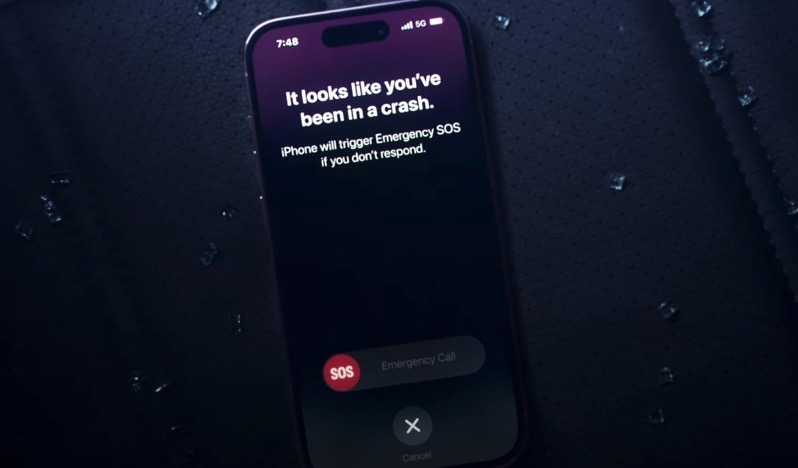
Apple’s new Crash Detection feature is still triggering false emergency calls, much to the detriment of emergency dispatch workers.
According to a report from The New York Times, a four-person 9-1-1 emergency service centre in Summit County, Colorado, home to several ski resorts, received a whopping 185 false calls from skiers’ iPhone 14s and Apple Watches between January 13 and 22 alone.
As ski resorts started seeing more traffic, the number of false alarms emergency service workers had to deal with went up exponentially.
“For the last three days, my watch has been dialing 911,” one skier told an emergency dispatcher after their Apple Watch’s Crash Detection feature was unnecessarily triggered, informing them that they were safe and okay. Crash Detection, available on iPhone 14 and select Apple Watch models, uses built-in sensors to detect when the user has been in a car crash and alert emergency services.
Unfortunately, the feature has proven in recent months that it isn’t nearly as accurate as it should be. Emergency dispatchers, meanwhile, have to divert resources from real emergencies to vet whether or not a crash alert was triggered by a human in need of assistance or erroneously by an Apple device.
“My whole day is managing crash notifications,” said Trina Dummer, interim director of Summit County’s emergency services. “Apple needs to put in their own call center if this is a feature they want.”
Back in December, emergency responders in Summit County had to deal with 71 erroneous Crash Detection calls in a single weekend. Apple optimized Crash Detection to address its sensitivity with iOS 16.1.2 in late November, but the feature is still causing plenty of false alarms.
Last month, Apple sent four representatives to Summit County’s emergency call centre for a day. According to Dummer, the Apple representatives had no shortage of false Crash Detection calls to observe.
“We have been aware that in some specific scenarios these features have triggered emergency services when a user didn’t experience a severe car crash or hard fall,” said a spokesperson for Apple. The company noted that when Crash Detection is triggered, the device buzzes and audibly alerts the user that a call will be placed to 9-1-1 if they don’t dismiss the crash notification.
“Crash Detection and Fall Detection are designed to get users help when they need it most, and it has already contributed to saving several lives.” Colorado’s 9-1-1 operators, however, couldn’t recall a single instance where an Apple Watch had saved a skier in distress.
Crash Detection triggering false alarms isn’t localized to Summit County — or skiers, for that matter. In December, the feature sent what experts believed to be its first false emergency alerts in Canada, where it is also available. The same behaviour has also been reported with other turbulent activities, including rollercoaster rides and even motorbiking.
In iOS 16.2, Apple added the ability to report erroneous Emergency SOS calls. However, while Crash Detection has incredible potential, it’s clear that the feature is in dire need of some fine-tuning.
Check out The New York Times‘ full story for more details, and let us know if you’ve had any experiences with Crash Detection erroneously triggering emergency calls in the comments below.



I think it’s insane that after the first time it happens, an individual doesn’t just turn it off…
I was fearful of the fall detection going off when I play hockey… so I turned it off… like an adult.
Also, it should be clear if the crash and fall detection are active or inactive when workouts are on.
IMO fall detection should automatically be inactive when the hockey workout is on (for example). The same should likely be true when the ski workout is active.
Makes sense for hockey because there’s always someone else around in case the real crash happens (like hitting the boards full speed) but for skiing, if one goes out of bounds and hits the tree or falls into a deep ravine and there’s no one else to call for help, I would leave it on. How difficult is to cancel it in case of false positive…
These false alerts are probably from skiers or snowboarders landing from a big jump, not falling on a groomed run. If the alert is just a slight vibration or buzzing sound, it would be difficult for a skier to notice as they try to navigate down a steep slope or try to gather their dislodged gears.
Also makes sense to turn it off in these scenarios since one can count on other people being around if something serious happens. But if planning to go off the beaten paths, I would leave it on; that was my point. I know everybody is different but any solo snow activity I would keep at least one earbud connected to my phone in all the time. There are also helmets with built in earphones, that makes it easier to monitor what your phone or watch is telling you
I’m actually surprised the number is only 185 false calls.