
WhatsApp Makes Searching Old Messages Easier on iPhone
WhatsApp is officially releasing an in-chat search button on iOS, removing the need to navigate to a sepeate menu.
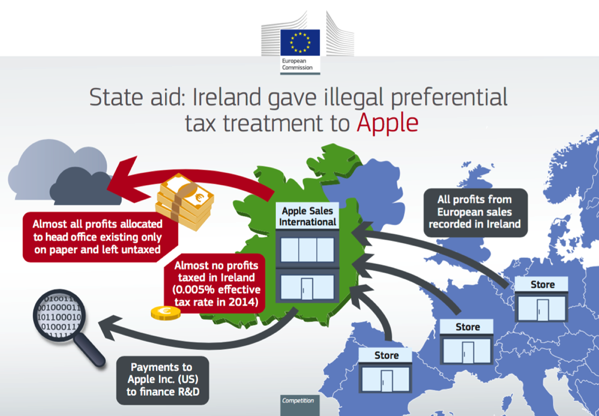
The EU’s Court of Justice has reversed a previous decision by the General Court about Ireland’s tax rulings in favour of Apple, confirming the European Commission’s 2016 finding that Ireland gave Apple illegal state aid that must be repaid.
In 2016, the Commission found that Apple companies received tax breaks from Ireland between 1991 and 2014, which counted as state aid. These breaks were tied to how profits made outside the U.S. were taxed.
Later in 2020, the General Court canceled the decision, saying the Commission didn’t prove that Apple got a special advantage, but the EU’s top court has now reversed that.
The Commission found that Ireland’s tax deals with Apple Sales International and Apple Operations Europe wrongly excluded profits from intellectual property from being taxed.
The Court of Justice decided that the General Court made a mistake and confirmed that Ireland must collect the €13 billion ($19.4 billion CAD) in aid given to Apple. This final decision supports the Commission’s view on Apple’s tax breaks in Ireland.
In a statement to CNBC, Apple said, “This case has never been about how much tax we pay, but which government we are required to pay it to. We always pay all the taxes we owe wherever we operate and there has never been a special deal.”
“The European Commission is trying to retroactively change the rules and ignore that, as required by international tax law, our income was already subject to taxes in the US,” said Apple.
Apple and others such as Google have previously been accused of using the “Double Irish Dutch Sandwich,” a tax trick used by corporations to pay less tax. It involves setting up two companies in Ireland and one in the Netherlands.
The first Irish company holds valuable assets like patents, and the second Irish company pays it a lot of money to use these assets, which is then sent to a low-tax country like Bermuda.
The Dutch company is used in the middle because of favourable tax rules. This setup moves money around in a way that helps the company pay much less in taxes than if it kept everything in one country.
Ireland stopped companies from leveraging this loophole back in 2014.
In a filing on Tuesday, Apple said that it will incur a one-time income tax charge of about $10 billion USD in its Q4 ending September 28, 2024. Ouch.
Apple knew this decision was coming likely today, which is why its iPhone 16 event was held yesterday, a rare Monday. Could you imagine iPhone 16 series phones being announced on top of this major EU fine? On top of that, today also marks the first Presidential debut between Kamala Harris and Donald Trump, which would have also made Apple compete for headlines.
Want to see more of our stories on Google?

P.S. Want to keep this site truly independent? Support us by buying us a beer, treating us to a coffee, or shopping through Amazon here. Links in this post are affiliate links, so we earn a tiny commission at no charge to you. Thanks for supporting independent Canadian media!

