The biggest changes focus on the info your watch collects throughout the day. Battery life remains rated for up to 24 hours, and Canadian buyers should know that hypertension notifications won’t be available on Series 12 at launch.
Our early recommendation is to keep a working Series 11 unless the new sensing features are something you specifically want. For first-time buyers or anyone replacing a much older watch, Series 12 makes more sense when the price difference is small.
This comparison uses Apple’s published specifications.
Apple Watch Series 12 vs Series 11 at a glance
Feature
Apple Watch Series 11
Apple Watch Series 12
Canadian starting price at launch
$549 CAD
$549 CAD
Chip
S10
S11
Case materials
Aluminum or titanium
Aluminum, titanium or ceramic
Aluminum and titanium case sizes
42mm or 46mm
42mm or 46mm
Display
Always-On OLED, up to 2,000 nits
Always-On OLED, up to 2,000 nits
Aluminum model’s front glass
Ion-X
Ceramic Shield 2
Advertised normal battery life
Up to 24 hours
Up to 24 hours
Advertised Low Power Mode battery life
Up to 38 hours
Up to 38 hours
Charging to 80%
About 30 minutes
About 30 minutes
Advertised use from a 15-minute charge
Up to 8 hours
Up to 12 hours
Cellular models
5G RedCap and LTE
5G RedCap and LTE
Prices are before tax. Series 11 pricing reflects its original launch price, not a current discount. Battery and charging results vary with use and equipment. Series 12’s ceramic cases measure 43mm or 47mm. Swipe horizontally on smaller screens to view the full table.
Canadian pricing: the starting price stays the same
More frequent heart monitoring is the main hardware upgrade
Series 12’s redesigned Health Sensing System takes background heart rate readings every five seconds and measures heart rate variability, or HRV, as often as every five minutes.
Apple describes that as 60 times more frequent background heart rate readings and 24 times more frequent HRV readings than Series 11. Those figures describe sampling frequency, not a claim that every measurement is 60 times more accurate.
For someone who regularly checks recovery trends, more frequent measurements could make the watch more useful between workouts and overnight. For someone who mainly wants to record a walk or check their heart rate during exercise, the practical benefit may be less obvious.
What does the new readiness score do?
Series 12 introduces a readiness score that combines recent activity, training load, vitals and sleep information into a score from zero to 10. It offers a daily recommendation ranging from recovery to a more active day. This readiness score is exclusive to the Series 12 and Ultra 4 Apple Watch.
Come on, Apple. At this point you may as well wear a Fitbit Air too to get better readiness score metrics and not have to worry about charging daily for sleep scores.
Apple also adds Recovery HRV information and a daytime view of vitals, extending the focus beyond overnight measurements.
That may appeal to people who already use their watch to help plan training. The useful question is whether you’ll act on that information, or whether it will become another number you occasionally glance at.
Series 11 already offers sleep tracking, sleep score and workout tools. You don’t need Series 12 simply to start tracking those basics.
Battery life stays the same, but short charging sessions improve
Both watches carry the same advertised 24-hour normal-use and 38-hour Low Power Mode ratings. Series 12 therefore isn’t a major battery-life upgrade on paper.
The difference is in shorter charging sessions. Apple says 15 minutes provides up to 12 hours of normal use on Series 12, compared with eight hours on Series 11. A five-minute charge is rated for up to 10 hours of sleep tracking, versus eight hours previously.
Both still take about 30 minutes to reach an 80% charge.
While the top ups are nice, the problem is you still need to actively remember to charge your Apple Watch ahead of bedtime if battery is low.
New audio features come with a wait
Series 12’s S11 chip enables Audio Intelligence features, including Live Rewind and Siri Recap. Live Rewind can display a short text snippet of what was just said, while Siri Recap creates a summary of a conversation.
Both are scheduled to arrive in beta in late 2026. They require an Apple Intelligence-enabled iPhone 16 or later, excluding iPhone 16e, and will initially support English.
Tougher glass and new finishes
The aluminum Series 12 replaces Ion-X front glass with Ceramic Shield 2. Apple says it is 60% tougher than the Ion-X glass on the aluminum Series 11. Titanium and ceramic Series 12 models use sapphire front crystal.
Ceramic also returns as a case option, in pearl white and night blue. Aluminum choices include dark bronze, black, light gold and space grey, while titanium comes in radiant gold and natural.
A Canadian limitation to know before buying
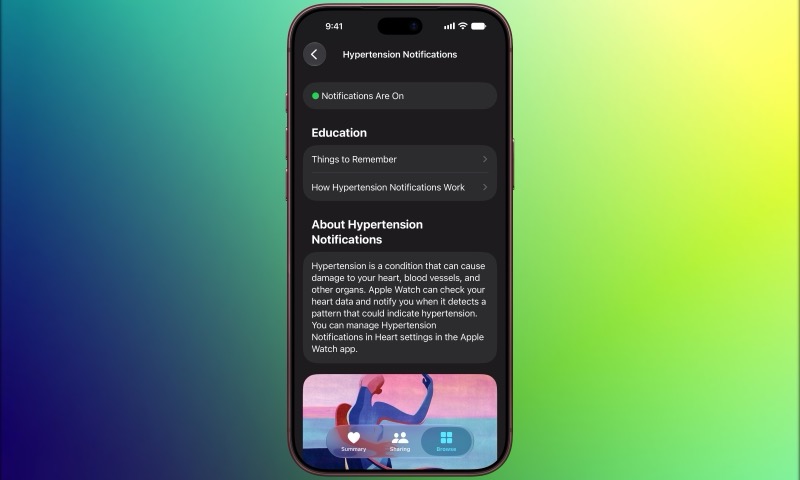
Apple says hypertension notifications will not initially be available in Canada on Series 12 while additional regulatory clearance is in progress. The company expects availability later this year.
Should you upgrade or buy a discounted Series 11?
Keep your Series 11 if it still does what you need. Notifications, workout recording and sleep tracking don’t become less useful because a newer model exists. The unchanged battery rating also weakens the case for upgrading purely for endurance.
Choose Series 12 if you want its more frequent sensing and readiness features. Those are the strongest reasons to consider the new hardware, especially if you already pay attention to recovery data.
Consider a discounted Series 11 if the savings are meaningful. Match the case size, material, connectivity and condition before comparing prices. Paying nearly the same amount for the older model is harder to justify. Prime Day will likely bring some Series 11 sales again.
For most Series 11 owners, we’d hold off. For someone replacing an older watch, Series 12 is the more appealing starting point, provided a substantial Series 11 discount doesn’t change the calculation. It’s nice that the starting price did not increase in Canada.
Want to see more of our stories on Google?
P.S. Want to keep this site truly independent? Support us by buying us a beer, treating us to a coffee, or shopping through Amazon here. Links in this post are affiliate links, so we earn a tiny commission at no charge to you. Thanks for supporting independent Canadian media!
Subscribe
2 Comments
Oldest
NewestMost Voted
sob28
1 month ago
Unless the battery in my Series 8 runs out of juice quickly (so far still good), I don’t see a compelling reason to upgrade.
Apple's hypertension notifications appear to be rolling out to Apple Watch Series 12 users in Canada, after initially being unavailable at launch due to regulatory requirements. An iPhone in Canada reader Trevor, based in Quebec, emailed us on October 15 to report that the feature had just been enabled on his Apple Watch Series 12....
iFixit has torn down the Apple Watch Series 12 and Apple Watch Ultra 4, giving both watches a 4 out of 10 for repairability while raising bigger questions about Apple's approach to Watch repairs. https://www.youtube.com/watch?v=c1duzuXz7D0 The Series 12 gets at least one welcome change: a battery pull tab. After removing the battery connector bracket, iFixit...
Apple has been ordered to pay another $184 million USD to medical technology company Masimo in its long-running Apple Watch patent dispute, pushing the total bill from a $634 million USD jury verdict to about $818 million USD, according to Bloomberg Law. US District Judge James V. Selna ruled Monday, October 5, 2026, that Masimo...




Unless the battery in my Series 8 runs out of juice quickly (so far still good), I don’t see a compelling reason to upgrade.
Agreed. My Series 8 is still easily lasting the day. I can’t afford to update every time there’s an increment.