Canadians with AirPods Pro can finally use their earbuds as hearing aids, at least in part of the country. The feature is now live in five provinces, nearly two years after Health Canada approved Apple’s hearing health tools in December 2024.
The Hearing Test on AirPods Pro 3 is now available across Canada. Meanwhile, the Hearing Aid feature, built for people with mild to moderate hearing loss, works on both AirPods Pro 3 (on sale for $299 right now on Amazon.ca) and AirPods Pro 2 in Alberta, British Columbia, New Brunswick, Prince Edward Island and Saskatchewan. Apple’s Canadian website now officially lists the Hearing Aid feature in those five provinces.
Apple announced the launch on Monday, and you’ll need AirPods Pro 2 or newer on the latest firmware, paired with an iPhone or iPad running iOS 27.2 or iPadOS 27.2. Once it’s set up, the Hearing Aid feature also works with a Mac running macOS Sequoia or later.
Those five provinces have one thing in common. Each one permits over-the-counter hearing aids, so a software-based hearing aid can be offered without a prescription from a doctor or audiologist. Apple is now working through approvals province by province, with the goal of bringing the Hearing Aid feature to all of Canada as soon as possible.
For now, that leaves Ontario, Quebec, Manitoba, Nova Scotia, and Newfoundland and Labrador on the outside. Ontario could be next, after the province said it plans to change its law to allow over-the-counter hearing aids as part of its fall economic update.
It also explains what an iPhone in Canada reader in Saskatchewan spotted last week. The reader sent us screenshots showing Hearing Aid and Media Assist switched on with AirPods Pro 2 and an iPhone running the iOS 27.2 release candidate, without any of the border-hopping workarounds Canadians have relied on for the past year.
Hearing loss is more common than many people realize. Nearly one in five Canadians report hearing difficulties, according to 2022 Statistics Canada data. Research has linked untreated hearing loss to a higher risk of social isolation and dementia, and plenty of people who need help never get tested.
Dr. Vincent Lin, of the otolaryngology department at Toronto’s Sunnybrook Health Sciences Centre, said in a statement to iPhone in Canada that he sees patients who find conversations “increasingly difficult or exhausting,” which can lead them to pull back from social situations. In his view, putting these tools on a device people already use “can help make hearing care more accessible and less intimidating.”
Andrea Bull, CEO of the Wavefront Centre for Communication Accessibility, told iPhone in Canada in a statement that tools that raise awareness and normalize hearing technology “can help reduce stigma.” She added that they should also encourage people to “seek professional audiology care when needed.”
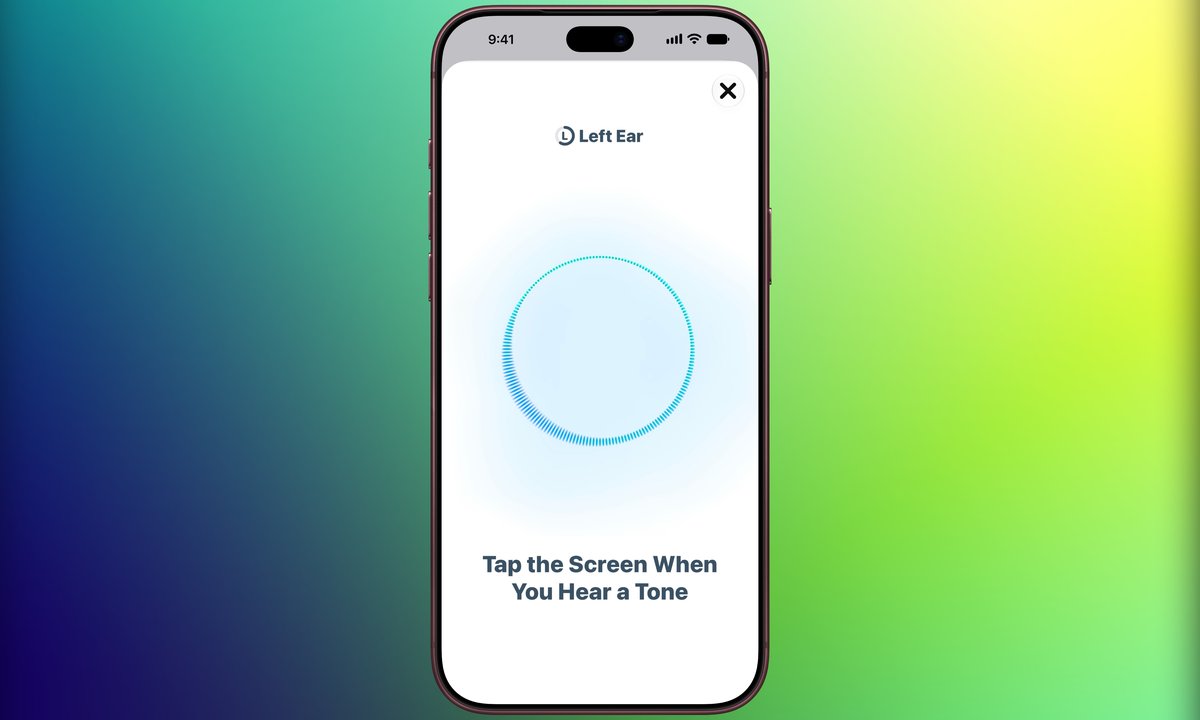
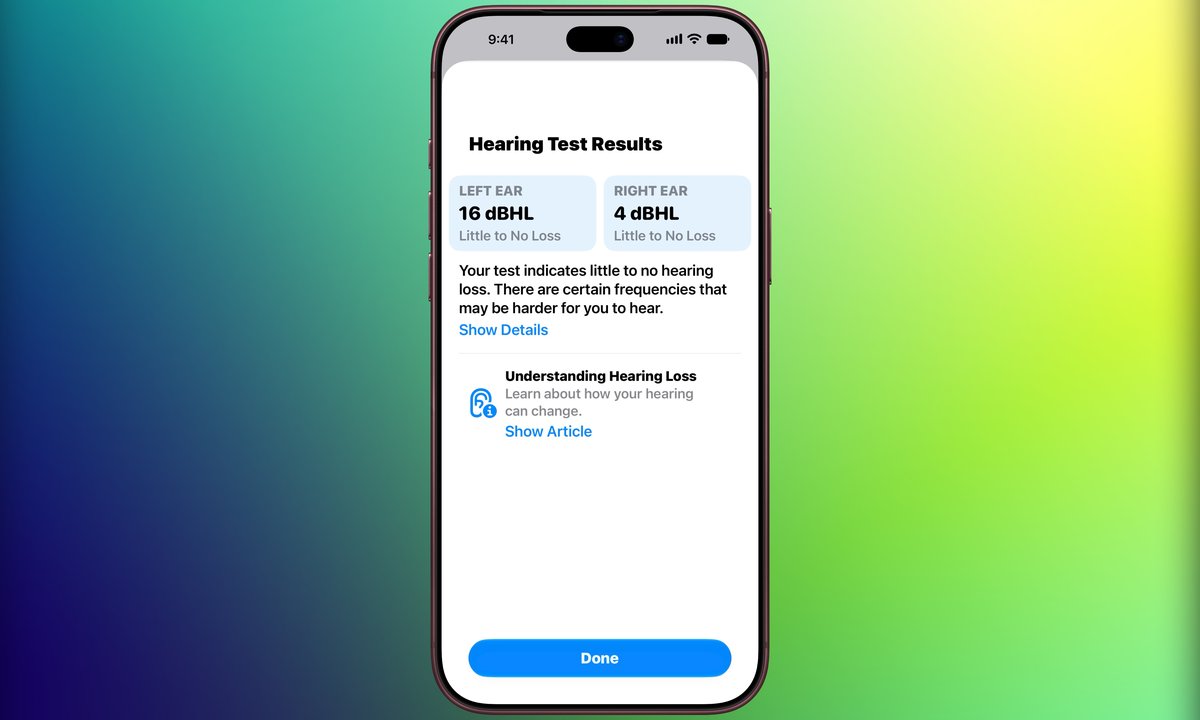
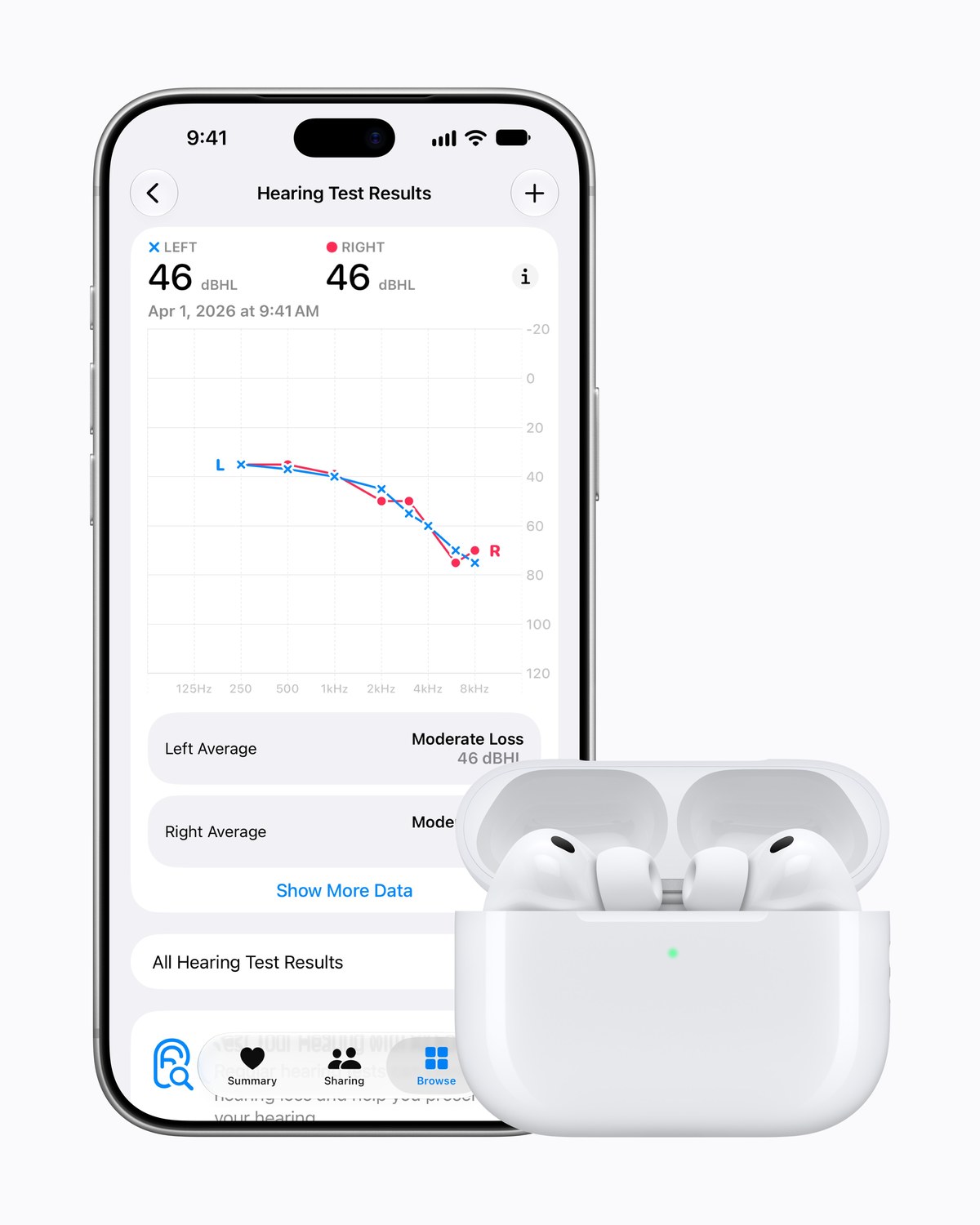
The Hearing Test itself is based on pure-tone audiometry, the same approach used in a clinic. When you finish, you get a number for the hearing level in each ear, a hearing loss classification and suggested next steps. Your results, including an audiogram, are saved in the Health app, and you can share them with your doctor or audiologist.
From there, the Hearing Aid feature uses your personal hearing profile to boost and fill in the sounds around you in real time, which can make conversations easier to follow. That same profile is applied automatically to music, movies, games and phone calls across your devices, so there’s nothing extra to adjust. Apple says both features were validated in a study it conducted and sponsored, dated October 2024.
Both new features join Hearing Protection, which is on by default on AirPods Pro and helps limit your exposure to loud environmental noise. An all-new multiband high dynamic range algorithm also aims to keep concerts and other live events sounding natural while bringing down harsh volume levels.

To check whether the features are available to you, update your iPhone and AirPods to the latest software, put your AirPods Pro in your ears, then open Settings and tap the name of your AirPods. Under Hearing Health, tap Take a Hearing Test, which runs about five minutes and works best in a quiet room. Once you have results, or an audiogram from a hearing professional, tap Hearing Assistance to set up the Hearing Aid feature.
On the privacy side, Health app data is encrypted when your iPhone is locked with a passcode, Face ID or Touch ID. With two-factor authentication turned on, health data synced to iCloud is end-to-end encrypted, so Apple can’t read it.
Apple sent me a pair of AirPods Pro 3 to test, and they sound really good. To my ears, they hold their own against my first-generation AirPods Max, which is saying a lot for something this small.
If you’re coming from the original AirPods Pro, this is a big upgrade. You get Adaptive Audio, Apple’s H2 chip, better bass, stronger active noise cancellation and USB-C charging. The case also has a built-in speaker for Find My, so it’s much easier to track down when it goes missing.
The extra ear tip sizes made a bigger difference than I expected, since these actually stay in my ears now. Water and dust resistance gets bumped to IP57, all at the same price. I’m also a fan of the wrist strap, which makes it a lot harder to drop the case.
Years ago, I had to step away from AirPods Pro after an ear infection I traced back to the silicone ear tips. Time will tell if my ears still prefer the tight seal of AirPods Pro again.
Keep in mind that both features are intended for adults 18 and older, and they’re meant for general information rather than a medical diagnosis. Anyone with severe hearing loss or a sudden change in hearing should see a doctor. For a closer look at how the two models compare, our AirPods Pro 3 vs AirPods Pro 2 comparison breaks down the differences, and you can check the latest AirPods Pro 3 price on Amazon.
Do you live in one of the five provinces, and have you tried the Hearing Aid feature on your AirPods Pro yet? Let us know in the comments.