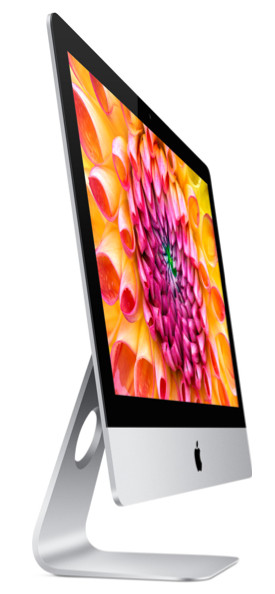
The aluminium joint on the all new 2012 iMac, which is just 5mm thick around the edges of the display, is made possible by a friction-stir welding technique which is an intellectual property of British company TWI, reports The Register.
The friction-stir welding technique, what was invented back in 1991 by Wayne Thomas at TWI, is a process that doesn’t require the materials to be melted for them to be joined. It merely softens and merges the edges by mixing the two materials under frictional heat, resulting in a smoother join of very high strength while requiring much less energy than traditional welding techniques.
It allows the join to be thinner too, so Apple can reduce the width of the iMac down to half a centimetre when attaching the front to the back of the computer: a “seamless, precise, and superstrong join” according to Apple
Apple licensed the tech earlier this year and has been testing it since then. Iain Smith, associate director and intellectual property manager of TWI, would not reveal the commercial details of the deal with Apple.
The first licensed use of friction-stir welding was the in the construction of freezers for Swedish fishermen. Since then it’s been used for spacecraft fuel tanks, aeroplane wings, high-speed trains, boat hulls and now, it’s in the new iMac.



That is a nice looking computer…
This is the reason why I buy Mac computers.
It’s probably a different method than this video, but a similar idea: http://youtu.be/5JbnDXw-0pM