
Rainbow Six Siege Operation Split Fire Adds New Operator Noor, Legend Division and Drone Racing
Operation Split Fire is a substantial update for Rainbow Six Siege, with a new Operator, Ranked changes, and an new competitive tier.
Leading sleep experts say that all smartphone manufacturers should include an automatic “bedtime mode” to help users sleep easily at night, Engadget reports. A recent study conducted by Paul Gringras, a professor at Evelina London Children’s Sleep Medicine and King’s College London, analyzed the light emissions of a smartphone, tablet and a backlit e-reader, revealing that while smartphone displays are getting brighter, they’re also getting bluer, which could be damaging our health through lack of rest.
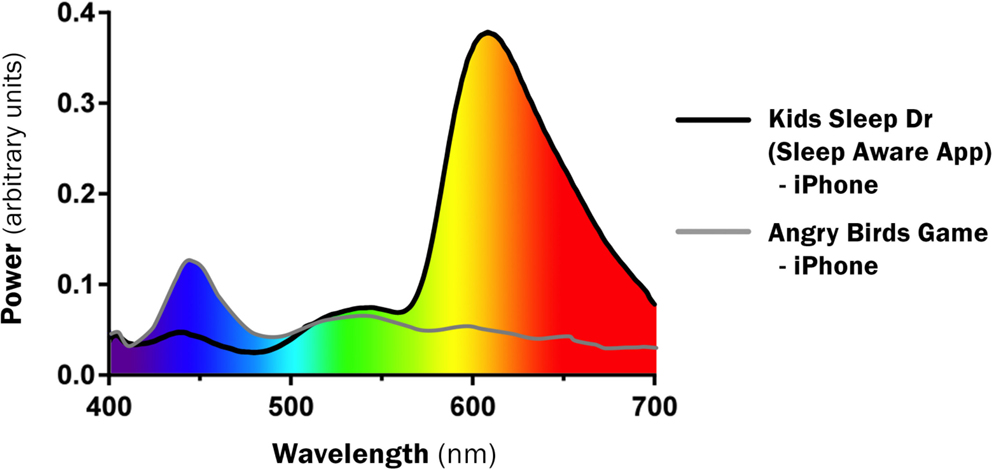
The study highlights that while most people rely on a day/night balance to regulate their sleep patterns, helped by the production of the melatonin as it gets dark, modern displays emit a blue-ish light that suppresses the hormone and gradually makes us more alert. In the first test, volunteers were given orange-tinted glasses that could block out the blue light, while in the second, they used an app that was designed to be used at night and shifted its color palette accordingly, and both proved highly effective. Experts believe a software to apply a “mask” to the device may be a viable solution.
“A faster and more tenable solution would be for manufacturers to ensure that software design is optimized when night-time use is anticipated,” the report says. “All hardware devices allow an automatic “bedtime mode” that shifts blue and green light emissions to yellow and red as well as reduces backlight/light intensity.”
Researchers admit that getting people to remove their smartphones and tablets from the bedroom is a big ask, especially for teenagers and adults who “make their own choices and are often influenced by peer and work pressures.”
Even though solutions like F.lux already exist, but when its developers recently released an iPhone app, which required sideloading, Apple pulled it for violating its developer agreement.
Want to see more of our stories on Google?
P.S. Want to keep this site truly independent? Support us by buying us a beer, treating us to a coffee, or shopping through Amazon here. Links in this post are affiliate links, so we earn a tiny commission at no charge to you. Thanks for supporting independent Canadian media!


The iPhone does, and I suspect many other smartphones do. On the iOS platform, it’s called “Do Not Disturb” and can be configured manually or set to activate between certain times of the user’s choice…
WHAT?! lol
Did you read a single word in the article?
I was confused as well 😛
Article is referring to light levels, not something like Do Not Disturb 🙂
This is very important stuff. At the very least they should enable the iPhone brightness to go much lower than it currently does. In the dark, even with the brightness turned all the way down, the iPhone is still very, very bright imo. It’s an easy fix, so hopefully this study gets some attention and these issues get addressed.
For even lower brightness, go to Accessibility settings > Zoom > Zoom Filter and select low light. Enable Zoom mode but toggle off the actual magnification.
I used this for a while but found readability got poorer. Last week, I found alternatives to f.lux to sideload: GammaThingy and GoodNight. I now use GoodNight and it’s great, though its on/off timers don’t quite work right
Glass to see this article. Home it gets Apples attention. I have f.lux loaded on my macbook and even a windows machine and Andriod tablet I occasionally use. I have put it on a few friends machines as well and they all agree its great. So dissapointed it wasnt available on iOS and that it missed out on when it was for that short time. As a work around I picked up a some of those yellow tinted shooting glasses for night time reading on my iPhone/Ipad.