German artist Boris Eldagsen, who won in the Creative category of the Sony World Photography Awards 2023, has rejected the prize saying the photo was generated by AI (via Vice).
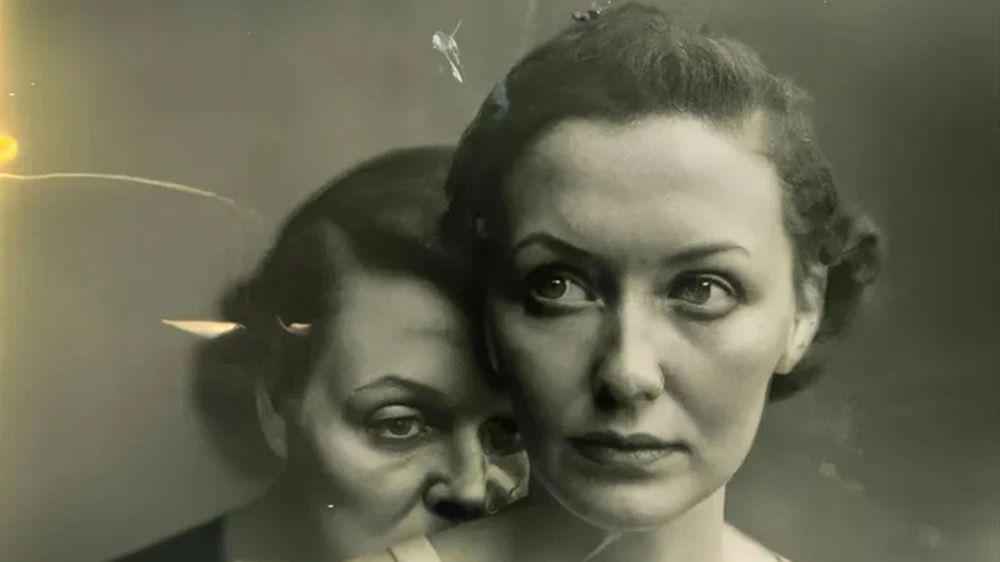
Called “PSEUDOMNESIA: The Electricia,” the image is described by Sony as “a haunting black-and-white portrait of two women from different generations, reminiscent of the visual language of 1940s family portraits.”
Eldagsen, however, revealed the truth on his website and refused the award noting that the image was generated by AI, and is not a real photo.
“I applied as a cheeky monkey, to find out if the competitions are prepared for AI images to enter. They are not,” he wrote.
“We, the photo world, need an open discussion. A discussion about what we want to consider photography and what not. Is the umbrella of photography large enough to invite AI images to enter—or would this be a mistake? With my refusal of the award I hope to speed up this debate.”
Eldagsen, who has been a photographer for 30 years, recently turned to AI as part of his artistic practice.
Meanwhile, a World Photography Organisation spokesperson said that the judges were under the impression that it was a “co-creation” with AI and that Eldagsen “deliberately” misled them.
“The Creative category of the Open competition welcomes various experimental approaches to image making from cyanotypes and rayographs to cutting-edge digital practices,” the spokesperson said.
“As such, following our correspondence with Boris and the warranties he provided, we felt that his entry fulfilled the criteria for this category, and we were supportive of his participation.” The organization even initially planned to run a Q&A with Eldagsen, but has since “suspended our activities” with the artist, the spokesperson said.
Interestingly, the top prize at the Colorado State Fair’s fine art competition last year also went to an AI-generated image, sparking a major controversy among artists.



I don’t understand the point of his “cheeky” experiment. So many things we engage with in this world rely on the belief that the person you’re interacting with is being genuine in order to function. Lying to organizers of a photography competition for no other reason than to see if they’d assume you were just another honest entrant seems really childish.
Agree with you up to a point. But I can see where use of an AI site can be seen as a variant on using artistic tools. For example, many photographers use Photoshop to modify an original image, and no one complains that the photo is done by Photoshop.
Clearly the AI didn’t generate that photo ad hoc; it must have required some input from the “artist”. It seems to me that a photo is “legitimate” if most of the artistic content came from the “artist”, including decisions on layout and content.
If all you need is “make me a black and white photo of two morose women with brooding overtones”, I wouldn’t consider the human artist to have ownership of the image. But if the image was developed with an interactive session with an AI, and most of the originality came from the human artist, that should be allowed.
Regarding your comment that we rely “…on the belief that the person you are interacting with is being genuine”, we are long past that. In fact, I don’t see how that matters if the goal is to identify photos with remarkable effects on the viewer. What is important is that most of the originality came from a human, if the goal is to reward humans for their skill.
I would say that I agree with most of your statements. However, after reading his explanation of the chain of events leading to his victory, it sounds like the points you’ve raised was a discussion he wanted to have with the competition’s organizers (in fact, discussing the implications of AI in photography appears to be his chosen field), but it’s one he only really initiated upon winning. I think this is still where my issue lies with his entry into the competition. He never bother to say up front that this combination of AI automation and human direction, with its associated positives and perils, was the question motivating this photo and the greater body of work from which drawn. He simply submitted the photo and said “hey, since they didn’t ask, I won’t to bother to tell them”. He had a second chance to do so when he was told he’d be short-listed and still chose not to, and we’re now only talking about this because he won. Perhaps he believed that if the organizers didn’t care enough to ask, they shouldn’t be told, but he himself called his entry “cheeky”, and that’s what rubbed me the wrong way.
I think he is showing a few things: 1. It’s easy to dupe the judges and, of course, many will if there is a financial incentive to do so. 2. It opens up the conversation of whether it should be allowed. Same criticisms came up with the advent of computerized music – and now we have accepted it and it has become the norm. Maybe the same will happen with AI art.
If he just accepted the award we wouldn’t be thinking and commenting on the issue. Good that he’s “cheeky”.