
Apple’s AirPort Utility App is Being Removed From the App Store
Apple warns that "functionality is not guaranteed" when using AirPort Utility on iOS 27 or later.
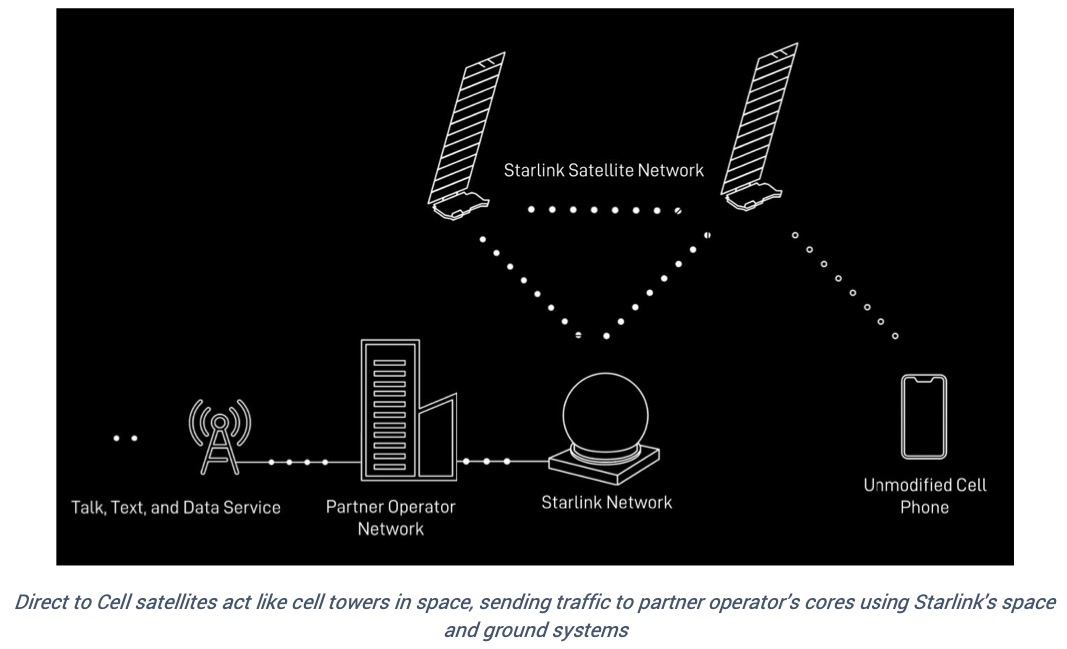
SpaceX’s Direct-to-Cell is a satellite texting service that lets any compatible smartphone send and receive messages, leveraging its Starlink constellation network.
The first cellular partner to go live with this service is T-Mobile in the U.S., which expanded its beta testing yesterday to any customer on any carrier, according to Tesla North.
T-Mobile also revealed Starlink Direct-to-Cell pricing for the first time, and with this info, we may be able to predict what this service will cost in Canada, when Rogers launches the service.
According to T-Mobile, here’s what it is charging for Starlink Direct-to-Cell, which includes access for AT&T and Verizon customers too:
So it’s clear that the Direct-to-Cell access will be a paid service of course, and if we convert the US pricing to CAD, we get the following rates, which we suspect could be a ballpark estimate of what Rogers would charge:
We can imagine Rogers possibly bundling Starlink Direct-to-Cell into its most expensive wireless plans, while also offering it as standalone monthly service too.
Direct-to-Cell is also live for texting in New Zealand through carrier One NZ in beta, which went live in December. Their Starlink pricing is available at no extra cost on select plans (starting from $45 NZD/month; or about $36.40 CAD), limited to those on a Samsung Galaxy Z Flip6, Samsung Galaxy Z Fold6, Samsung Galaxy S24 Ultra, and OPPO Find X8 Pro.
Now why would someone want to pay for Starlink Direct-to-Cell? It allows you to use your iPhone or other compatible smartphone for satellite messaging. If you’re someone that spends time in the back country or you travel along rural highways and roads that have terrible or non-existent cell coverage—staying connected in emergencies can be life-changing.
Starlink Direct-to-Cell would eliminate the need to carry a Garmin satellite communicator like its inReach Mini 2. You get better battery life with the Garmin but you need to pay for the satellite subscription service.
Here are the compatible smartphones (as of writing) that support Starlink Direct-to-Cell (no modifications necessary):
T-Mobile’s website explaines, “We worked closely with Apple and Google to make T-Mobile Starlink the default satellite connection on their smartphones.”
Apple currently offers free satellite messaging, known as Emergency SOS via Satellite, is available for iPhone 14 and later models to let you connect with emergency responders. The free service will end in November 2025 for iPhone 14 series customers. Apple hasn’t shared any pricing yet on what it will charge for this service.
What makes Starlink Direct-to-Cell different is you can text any number you want directly, just like regular texting. The ability to use data with Starlink Direct-to-Cell will come later, as the constellation continues to expand beyond its current 451 satellites (and counting every week).
Want to see more of our stories on Google?

P.S. Want to keep this site truly independent? Support us by buying us a beer, treating us to a coffee, or shopping through Amazon here. Links in this post are affiliate links, so we earn a tiny commission at no charge to you. Thanks for supporting independent Canadian media!


Apple messaging over satellite allows sms text or iMessages to any number. Not just emergency. It’s also free for now.
How will that work with starlink messaging? I don’t like the „to make starlink the default satellite connection”, would rather enjoy Apple service which works quite well.
Interesting how AT&T and Verizon customers can still gain access. For me it's just too limited, send and receive SMS?
1-5 Mbps would be better and let the customer do what they want.
It's available right now via Starlink. The "experts" are just too dumb to know it.
Yeah, like I can really see giving my money to a fascist wannabe dictator like Musk.
Never.
You are right. Much better to give your money to the Chinese or Russians who are building their own sat systems, using technology they stoll from the US.
Jeez…grow up liebtard.
I have had the capability to have mobile Starlink coverage from my phone since 2022 when I got my first Starlink system. Also in 2022, our local radio club provided a Starlink system to a local indigenous community. However, when we asked the local county to reimburse us with money from the $23 million federal-provincial grant they received as a subsidy to install fibre to its residents, they refused saying: "Get your own grant money!" With no regular source of income our club had to cancel the service.
Eight months ago I cancelled my service which I had been paying $140/mo. for. However, to encourage people with inactive systems to reactivate, Starlink introduced a C$15/mo. mobile plan. While it only includes 10 GB/mo. of data, that is sufficient for voip service, and also as a radio amateur using "Echolink", I can talk with other radio Amateurs while operating mobile, world wide. This effectively makes vhf-uhf tower-based systems obsolete.
So you are saying that direct to cell is already available in Canada without going through Rogers? If so, how does it work? I use Apple's free satellite messaging for now but would love to be able to have data when I have no reception to send a picture while hiking every now and then.
Eight months ago I cancelled my service which I had been paying $140/mo. for. However, to encourage people with inactive systems to reactivate, Starlink introduced a C$15/mo. mobile plan. While it only includes 10 GB/mo. of data, that is sufficient for voip service, and also as a radio amateur using "Echolink", I can talk with other radio Amateurs while operating mobile, world wide. This effectively makes vhf-uhf tower-based systems obsolete.