
WhatsApp Makes Searching Old Messages Easier on iPhone
WhatsApp is officially releasing an in-chat search button on iOS, removing the need to navigate to a sepeate menu.
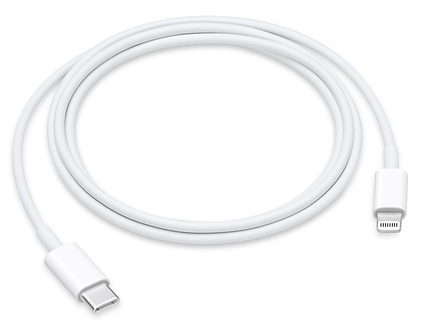
The European Council on Monday rendered its “final approval” for new European Union (EU) legislation that will force USB-C adoption on most devices from technology companies — most notably Apple, which has held out on iPhones and AirPods while transitioning the rest of its product portfolio to the almost-universal standard.
It looks like the days of enthusiasts jury-rigging iPhones with USB-C ports might soon come to an end, though. Come late 2024, Apple — and other tech manufacturers — will be required to have USB-C ports on most devices.
The European Council announced the decision in a press release. “It will no longer be necessary to buy a different charger every time you purchase a new mobile phone or similar device: all of them can be recharged using the same charger,” the Council said.
The EU’s new rules will mandate USB-C ports on:
“We all have at least three mobile phone chargers at home. Looking for the right charger, either at home or at work, can be quite annoying,” said Jozef Síkela, Czech Minister of Industry and Trade. “On top of this, these chargers amount to 11.000 tonnes of e-waste every year. Having a charger that fits multiple devices will save money and time and also helps us reduce electronic waste.”
The EU’s common charger mandate has been more than a year in the making. A proposal to adopt USB-C was first tabled by the European Commission in September 2021.
Now that the Council has approved the proposal, the legislative act has been adopted by the EU. Next, it will be signed by the President of the European Parliament and the President of the Council, after which it will be published in the Official Journal of the European Union.
The legislation will enter into force 20 days after it is published in the Journal, and the regulations defined therein will start to apply 24 months after the entry into force. For laptops, all of the same rules will be applicable but won’t go into effect until 40 months after the legislation’s entry into force.
The EU’s new common charger law goes beyond just mandatory USB-C adoption. Manufacturers will also be required to include a newly-introduced pictogram indicating a device’s charging performance and whether it comes with an included charger on product packaging.
What’s more, the directive will force companies to let consumers choose whether they want to purchase a new device with or without a charger — a choice that was taken away from buyers when smartphone companies stopped including chargers, an industry trend Apple pioneered with the iPhone 12 in 2020.
With the EU spelling the end for proprietary connectors like Apple’s ancient Lightning port, the rest of the world will likely follow in the footsteps of the European Parliament’s common charger directive. There has already been chatter of U.S. senators wanting to standardize USB-C for mobile devices.
While Apple has strongly opposed the EU’s call for a common charger, the tech giant could see lawmakers breathing down its neck and has already been testing iPhones with USB-C ports internally. We could see Apple launch the first iPhone with a USB-C port as early as next year.
Want to see more of our stories on Google?

P.S. Want to keep this site truly independent? Support us by buying us a beer, treating us to a coffee, or shopping through Amazon here. Links in this post are affiliate links, so we earn a tiny commission at no charge to you. Thanks for supporting independent Canadian media!


It would be nice if they would stop saying “different charger”. The current iPhone charging “cable” is a USB-C to Lightning cable, using the exact same “charger” as a USB-C device. Although I will look forward to the Apple Magic Mouse, Keyboard, Airpods, iPhones and other devices no longer having a lightning cable, it is justification enough to have the same end to end cable. Endless comments about the “charger” make it obvious that some people were trying to make an issue out of something that isn’t. I carry the same exact charger for my computer, USB-C and lightning devices, with all of the “charger” end of the cables being USB-C.
Exactly my thoughts reading this article. Technically Apple products are already compatible with USB-C “chargers” via the cable, which ironically is actually problem for most people I know who have USB-A chargers throughout their home and would prefer to have one of the original USB-A to Lightning cables. Also ironic about this is that personally I already have lightning cables situated throughout my home for all of my Apple devices, so switching the devices from Lightning to USB-C ports will actually require me to purchase new cables and/or chargers to charge these new devices when keeping them as Lightning would have required me to buy nothing new. I know I’m not the norm, but I still find it ironic that this change will require me to spend more on chargers and cables, not less. In fact I think most people will have to spend a lot of money switching from USB-A to USB-C since USB-A ports became so ubiquitous over the last decade.
Why is the government involved in this? that seems to be a waste of resources to legislate something like this.
Sorry, lightning to USB C is not USB C. It’s fixing a problem that shouldn’t have been one to begin with and throwing a band aid over it. Lightning standard is still USB 2.0. We’re now at USB 4. It took Apple 2-3 years to actually include a USB C to lightning cable in the box instead of charging an utterly absurd $90 for a quick charger while not actually including one of any kind in the box.
Not sure why all the complaining about making all iPhones charge with USB C at both ends, Apple is already doing this with their tablets. USB C and power delivery standards is where it’s at, not this proprietary quick charge nonsense with USB A. USB A still has its place but again, blame apple for removing those ports from their portable macs years ago. The mac mini, amazingly, still contains 2 USB A ports.
The argument they are making is needing a “common” charger, and for the purpose of which charger you buy and plug into the wall, yes it is the same. You’re right on the other points, and it is very desirable to have “end to end” USB-C but to have the EU mouthpiece blathering on about how he has “three” different chargers at home is a nonsense argument. I have one type of charger. He should have put forth a truthful argument, perhaps like you did. I don’t know why you down voted my comment, I do want Apple to have USB-C, I just took issue with the claim about the charger, which is factually correct.
Funny, I’m sure when Apple made your beloved USB C standard across their entire laptop range way back in 2016, you were probably the first to complain and scream bloody murder back then too.
People are still clamouring for Apple to bring back USB A and claim they are evil for not doing so. It’s impossible to please everyone. When they drop lightning, the non tech-elite will be livid about having to replace all their cables.
should i cancel my order for the iphone 14 pro max hmmm
Depends what you’re upgrading from. I had an XS Max so I upgraded for reasons different from the charger issue. I do like having USB-C on my iPad but I am unwilling to wait longer for the iPhone. Apple should have already put USB-C on the iPhone and without being prodded by the EU. They attract unnecessary attention to themselves by being laggard like this.
iPhone 11 Pro Max 256GB, it feels so laggy now a days
So yours is one version newer than mine. I can say I’m quite happy with the iPhone 14 Pro Max, I got the 256 gig version and it works nicely. I didn’t transfer my old phone settings, I configured the new one from scratch, which was a bit tedious but not that bad. If you keep your order, I’m sure you will enjoy yours.
Funny that this author calls lightning antiquated, but by the time USB C is mandatory in all laptops in 2026 (40 months from now), it will have been 10 years since Apple switched to USB C on all their laptops. I assume this same author will then have another article out damming Apple and cursing the EU for forcing companies to include such an “antiquated” port. Perhaps these EU regulators haven’t thought this through very well.