
Samsung Galaxy Tab S12 Ultra Hands-On: Familiar Hardware, Smarter AI
The Galaxy Tab S12 Ultra feels more like Samsung refining its best tablet than reinventing it with improvded audio and AI capabilities.
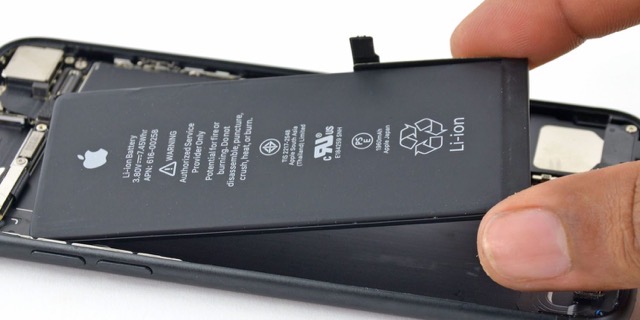
Apple could make iPhone battery replacements significantly easier starting later this year, according to a new report from The Information.
The decision is likely designed to comply with a new EU law requiring smartphone batteries to be replaceable by users with easily accessible tools by 2025. Citing sources involved in the iPhone’s manufacturing, the publication reported that Apple is testing electrically induced adhesive debonding technology to simplify iPhone battery replacement.
Apple currently uses adhesive strips to hold down iPhone batteries wrapped in black foil. To replace the battery, the adhesive strips must be carefully pulled out with tweezers. If a strip breaks mid-removal, heat or a solvent such as isopropyl alcohol must be used to weaken the adhesive before prying the battery from the chassis. What’s more, the recommended installation procedure for a new battery involves a tray and a specialized tool.
Electrically induced adhesive debonding would see Apple ditch adhesive strips altogether. Instead, the battery will be enclosed in a metal jacket and applying a small voltage to the pack would pop it right out of the chassis.
Electrically induced debonding is sure to make battery replacement less laborious — if not easier, given that you’d still need specialized equipment to apply a current to the battery pack.
Per the new report, Apple plans to debut the new battery replacement method starting with at least one model from the upcoming iPhone 16 lineup that’s due to launch in September. All but one of this year’s new iPhones are rumoured to feature larger batteries.
Last month, renowned Apple leaker Ming-Chi Kuo suggested that Apple might use a stainless steel battery case for the iPhone 16 Pro Max as a thermal management solution for expectedly higher battery temperatures, with improved repairability being a byproduct of the move.
If it proves to be successful in improving repairability, the metal battery jacket and electrically induced adhesive debonding combo could then make its way to the entirety of next year’s iPhone 17 lineup.
There’s also a chance Apple could be exempt from the EU’s consumer-friendly battery replacement rules altogether, provided future iPhones meet certain criteria (such as retaining 83% of their design capacity after 500 full charges and 80% after 1,000 full charges).
Apple has been patentedly stubborn in making its devices more repairable. However, regulatory pressure and the consumer-backed Right to Repair movement have forced the tech giant to give way in recent years — at least in some areas.
Not only has Apple started inherently improving repairability with its designs, but the company even launched the Self Service Repair program in 2022 to make replacement parts widely available and enable at-home device repairs. Earlier this week, Apple announced that the Self Service Repair program will be expanding to Canada in 2025.
Want to see more of our stories on Google?

P.S. Want to keep this site truly independent? Support us by buying us a beer, treating us to a coffee, or shopping through Amazon here. Links in this post are affiliate links, so we earn a tiny commission at no charge to you. Thanks for supporting independent Canadian media!


They should also make it mandatory that all iPhones come with dual SIM card slots as well, not just one SIM slot and one eSIM. Not sure why Asia is the only part of the world that gets' these phones.